Snow on the Way? Here's Whether Your Tires Can Handle It
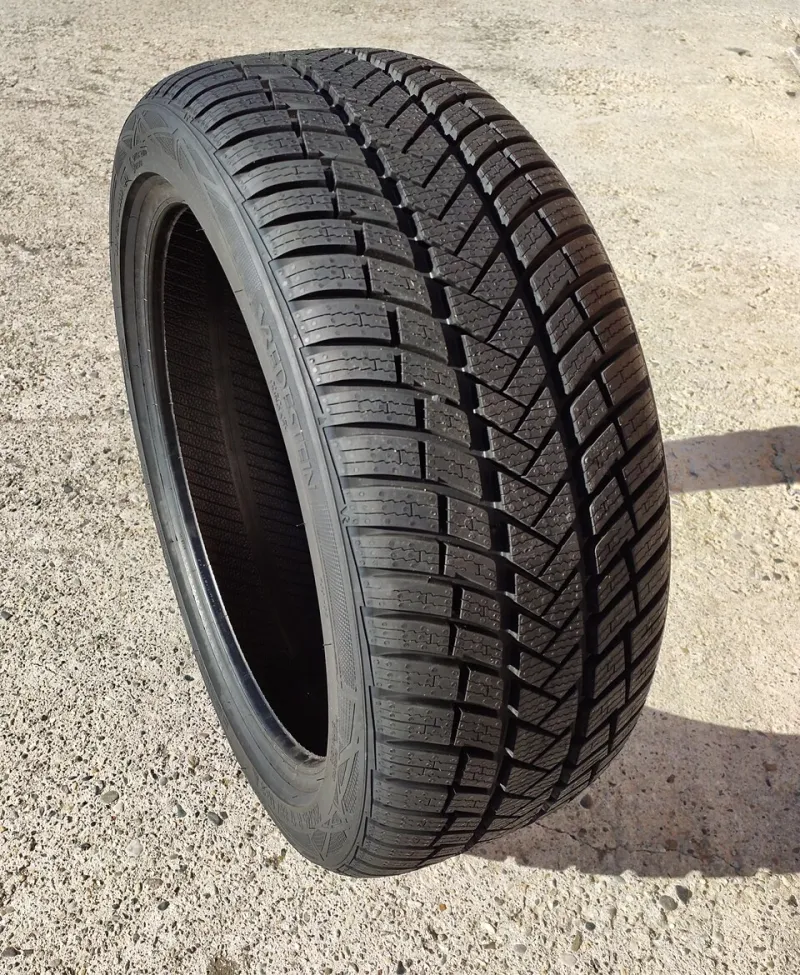
Photo: MatthewGhera, CC BY 3.0, via Wikimedia Commons
Every fall, somebody rolls into the shop with the same question: "Edwin, do I really need winter tires, or are my all-seasons good enough?" And honestly, it's a fair question. Tire companies would love to sell you a second set, but the truth is a little more nuanced — and it depends mostly on where you live, how much you drive, and what your budget looks like.
Let's sort it out, no pressure, no upsell.
The Three-Way Matchup
All-season tires are the flip-flops of the tire world — versatile, everywhere, and fine for most days. They're engineered with a rubber compound that stays reasonably flexible across a wide temperature range, and their tread pattern handles rain and light snow. The catch? When temperatures drop below about 45°F, the rubber hardens up and grip drops off, especially on ice or packed snow.
All-weather tires are the newer kid on the block. Look for the Three-Peak Mountain Snowflake (3PMSF) symbol on the sidewall — that means the tire passed a standardized snow traction test. All-weather tires are essentially a winter-capable tire you can run year-round. They're a great middle ground for folks who get real winter but don't want a second set sitting in the garage.
Dedicated winter tires (sometimes called snow tires) are the specialists. Softer rubber that stays pliable in deep cold, deeper tread blocks, and sipes — those tiny slits that bite into snow and slush. On ice and snow, nothing else comes close. The trade-off is that they wear faster in warm weather and shouldn't be run year-round.
The Checklist: Which One Are You?
Run through these questions honestly:
- Does your area regularly see snow and ice that sticks around? If you're in upstate New York, Minnesota, or the Colorado high country, that's a yes. If you're in the Carolinas and get a dusting twice a year, probably not.
- Do you drive daily in winter, or can you just stay home when it gets bad? Commuters who can't skip a shift have more skin in the game.
- Do you drive at night or early morning, when black ice is most likely? Winter tires shine brightest exactly then.
- Is your budget tight enough that two sets of tires plus a seasonal swap is a real stretch? Then all-weather is probably your sweet spot.
- Do you already run a second set of wheels? If the rims are sitting in the garage, the math tilts heavily toward dedicated winters.
The Honest Answer on Twice-a-Year Swaps
Here's the deal from someone who's mounted a few thousand tires: if you're spending serious money on a dedicated winter set, use them for what they're for. Mount them when the daytime highs settle below 45–50°F in the fall, and swap back once spring temps hold steady. Running winter tires through a hot July shreds them — the soft compound wears like chalk and your handling gets mushy.
A seasonal swap at the shop usually runs $40–$80 if your tires are already mounted on a second set of wheels, and it takes about 30 minutes. If we have to remount tires on the same rims each time, add a bit more and expect some eventual bead wear. That's why we always tell folks: buy winter tires on cheap steel or alloy wheels. It pays for itself in convenience.
One more thing — don't forget the tire pressure drop. Cold weather knocks roughly 1 PSI off for every 10°F dip. Check pressures when the seasons change or that tire pressure light will be blinking at you by the first cold snap.
What About AWD and 4WD?
A quick word on this, because we hear it constantly: all-wheel drive helps you go, but it doesn't help you stop or turn. A Subaru with worn all-seasons will out-accelerate a FWD sedan with winter tires on takeoff — and then slide straight past it at the stop sign. Traction control and ABS are great, but they can't create grip the tire doesn't have. If you're counting on AWD to save you, you're only getting a third of the story.
Our Bottom-Line Recommendation
- Mild winters, occasional snow that melts fast: Good all-seasons, checked for tread depth (4/32" minimum before winter), and call it a day.
- Real winters, moderate driving, one set of wheels: All-weather tires with the 3PMSF symbol. Run them year-round and sleep easy.
- Harsh winters, daily commuting, can swing the upfront cost: Dedicated winter tires on a second set of wheels. It's the safest setup, full stop.
And whatever you choose, don't mix and match. Two winter tires on the back with two all-seasons up front (or vice versa) creates unpredictable handling — it's one of the few things we'll flat-out refuse to do here, because it's genuinely unsafe.
Swing by the shop if you want a straight answer for your specific car and your specific street. We'll look at your tread, check your pressures, and tell you what we'd put on our own family's vehicles. That's the whole pitch.