A Nail Isn't a Verdict: How a Tire Shop Decides Between a Repair and a New Tire

Photo: Shixart1985, CC BY 2.0, via Wikimedia Commons
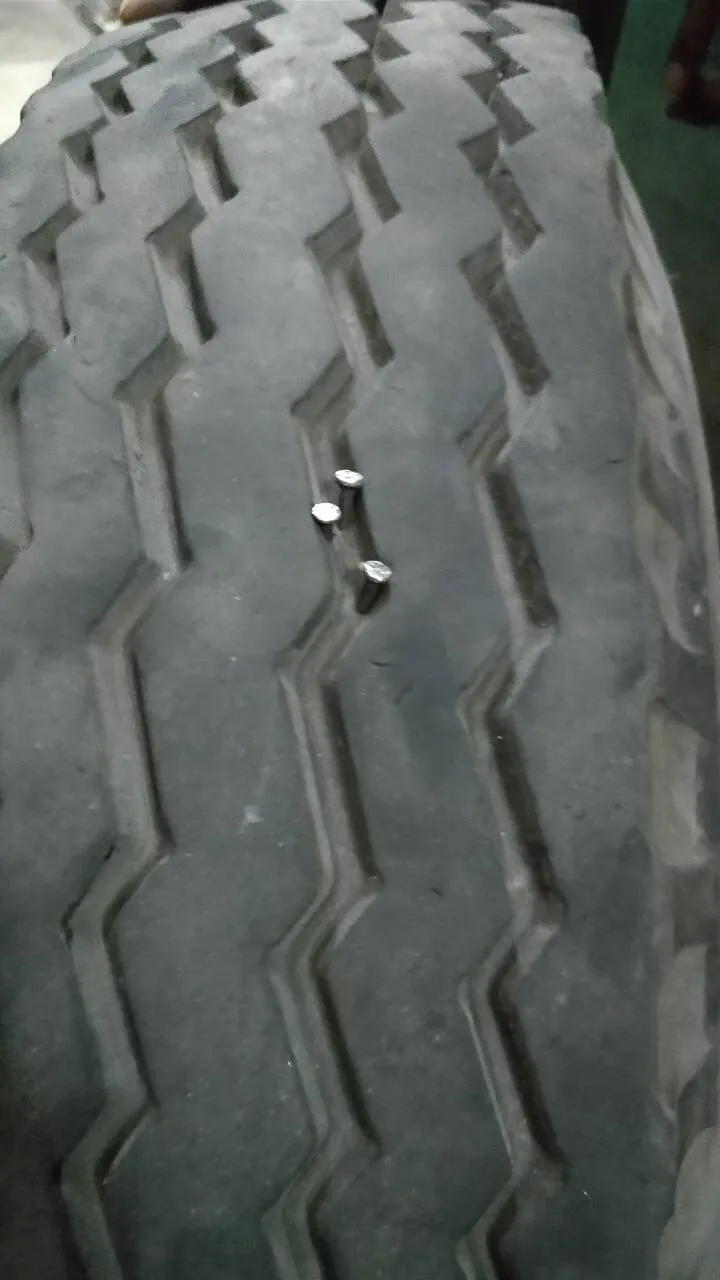
You hear it before you see it: a soft tick, tick, tick that keeps pace with the wheel and fades when you slow down. Then, at the next stop, there it is — a screw head sitting flush in your tread like it owns the place.
The first instinct is to grab the pliers. The better instinct is to leave it alone for a minute. What happens next depends on a handful of things a shop can check in about ten minutes, and almost none of them have to do with how the nail looks from the outside. Here's the real decision tree, minus the drama.
Step One: Don't Pull It
If the tire is still holding air, leave the nail in and drive — gently — to a shop. The nail is plugging its own hole. Pull it in your driveway and you may turn a slow leak into a flat you have to change in the rain. If you hear hissing or the tire is visibly low, put on the spare or call for a tow. A tire driven flat, even a short distance, can be ruined internally, and that's the difference between a $35 repair and a new tire.
Location Is Most of the Answer
Tires have zones, and they don't all repair the same way. The repairable zone is the tread — the crown of the tire, the part that meets the road. The shoulder, where the tread rolls into the sidewall, and the sidewall itself are a different story. Sidewalls flex constantly and carry the tire's load. A patch there can't be trusted to hold, and the puncture has likely damaged cords that hold the tire together. Industry guidance from the U.S. Tire Manufacturers Association is blunt on this point: injuries in the sidewall or shoulder aren't repairable. No reputable shop should patch one, no matter how small it looks.
Size, Count, and Angle Matter
Once the tire is off the car, a technician checks the puncture itself. The common rule is a quarter inch, roughly 6 mm, or smaller in diameter. Bigger than that, or a tear rather than a clean hole, and the tire's structure is compromised.
Count matters too. One nail in the tread is routine. Two punctures close together, or two in the same groove, usually point toward replacement — each repair weakens the liner and the belts in that area.
Angle is the quiet one. A nail that went in straight is one thing. A screw that entered at a sharp angle and traveled sideways under the tread can damage the steel belts or the inner liner in ways nobody can see from outside. That's exactly why the inspection has to happen from the inside.
A Plug Is Not a Patch — and a Plug-and-Patch Is Both
Here's where drivers sometimes get sold the wrong thing, often without anyone meaning harm.
A quick plug is done from the outside. The tech reams the hole, pushes a sticky rope of rubber through, and trims it flush. It's fast, it's cheap, and it's meant as a temporary fix to get you to a shop. It doesn't seal the inner liner, and moisture can work its way into the belts over time.
The industry-standard repair is called a combination plug-and-patch. The tire comes off the wheel and goes onto a spreader so the inside can be inspected. The injury is cleaned and reamed from the inside, the area is buffed, cement is applied, and a patch with an attached plug stem is pulled through from within. The patch seals the inner liner; the plug fills the hole. Done correctly, with the tire properly demounted, it's a permanent repair that can carry a warranty.
If a shop quotes you a repair, it's fair to ask which version you're getting. The answer tells you a lot.
What a Good Shop Checks First
Before anyone writes a number on a ticket, a thorough shop looks at more than the nail:
- Puncture size and location — tread versus shoulder versus sidewall.
- The inside of the tire — for liner damage, belt separation, or signs of a previous bad repair.
- Tread depth — a tire at 4/32 inch or less is near the end of its life; repairing it may not be money well spent.
- Tire age — the four-digit DOT code on the sidewall. A ten-year-old tire with great tread is still a ten-year-old tire.
- Speed rating and load index — some manufacturers don't allow repairs on certain high-speed tires, and a repair can reduce a tire's speed capability. Ask.
- The wheel and TPMS sensor — a sensor damaged during the repair is a separate cost, and a good shop flags that before the work, not after.
What It Should Cost
A proper plug-and-patch repair at an independent shop typically runs $25 to $50, and often includes demounting, mounting, and balancing. An outside quick plug might be $10 to $20, but now you know what you're buying.
A replacement is a different scale. Figure $70 to $150 per tire for common sizes, plus mounting and balancing, a TPMS service kit if needed, and a small disposal fee. None of that is unreasonable — but it should be explained, not sprung.
Questions to Ask Before You Hand Over the Keys
- Are you demounting the tire and inspecting the inside before you repair it?
- Is this a plug-and-patch or just a plug?
- Is the puncture in the repairable tread area?
- Does this repair affect the tire's speed rating or warranty?
- What's the tread depth and DOT age on this tire?
- Is there a warranty on the repair itself?
- If you're recommending replacement, can I see the damage you found?
A shop that answers those without flinching is a shop worth keeping.
When Replacement Is the Honest Answer
Sometimes it is. A sidewall or shoulder puncture, a hole over a quarter inch, multiple punctures, a tire that was driven flat, visible belt separation, a bead torn during mounting, or a tire already near the end of its tread — those are replace, not repair. Same for a tire with an earlier improper repair in the same spot.
The honest version of that conversation sounds like: 'Here's what I found, here's why it can't be repaired safely, and here's what a replacement costs.' The other version skips the first two parts.
At Edwin's Tires, we'll pull the wheel, look inside, and tell you which side of the line your tire is on. If it's a $35 fix, that's what we'll quote. If it isn't, we'll show you why.