The Warranty at the Counter: What Road Hazard Coverage Really Promises
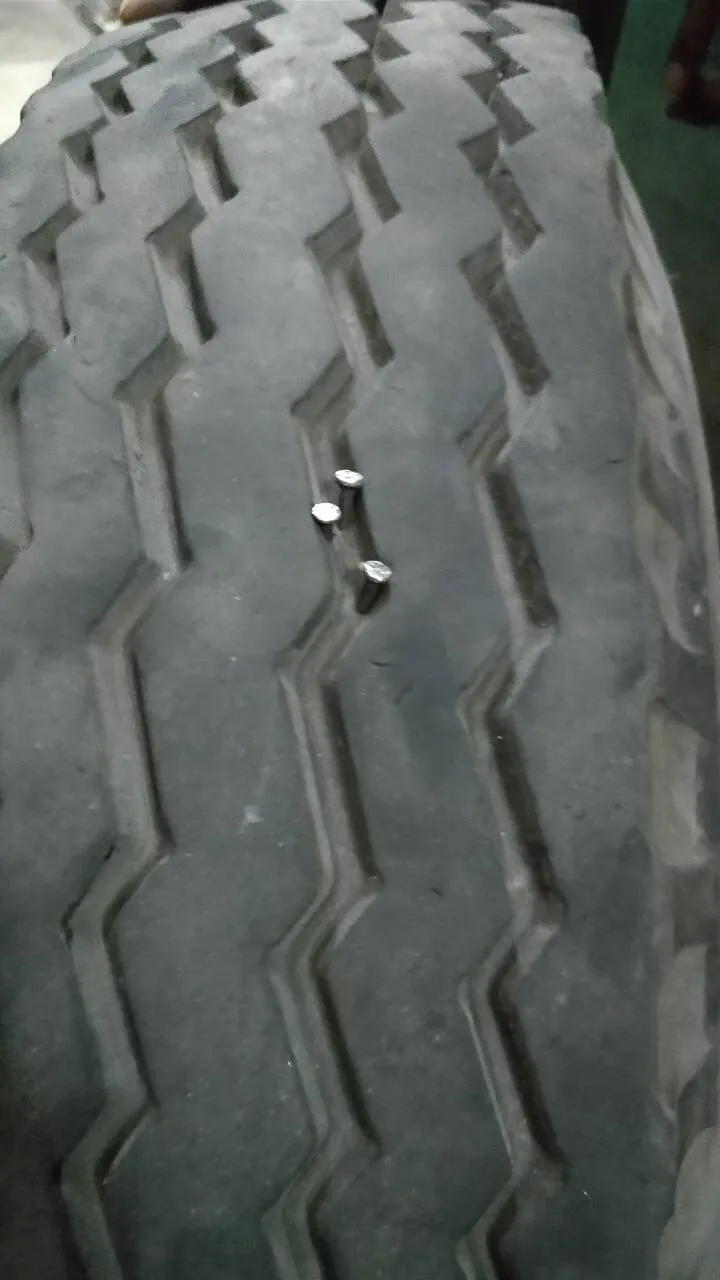
Photo: Topbossplasticsubic343, CC BY-SA 4.0, via Wikimedia Commons
Somebody at the counter slides a form toward you, taps a box that says Road Hazard Protection, and says it's eighteen bucks a tire. You're already spending four hundred dollars. Eighteen more feels like cheap insurance, so you nod. Six months later there's a nail in your shoulder tread and you find out the eighteen bucks bought you a discount code and a shrug.
That's not a scam story. It's just how these plans work, and the details are almost always printed in a font size you'd need a tire gauge to read. Road hazard coverage can be genuinely good money spent — or a pure margin builder. The difference lives in about six lines of fine print.
What 'road hazard' usually means
Most plans define a road hazard as something on the road that you couldn't reasonably avoid: nails, screws, glass, metal shards, potholes, curbs you clipped in a parking garage, debris from a truck bed. If the tire fails because of one of those, and it meets the plan's conditions, you get a replacement or a credit.
The word doing all the work there is conditions. A typical plan pays on a pro-rated basis, meaning if your tire is half worn, you get roughly half its value toward a new one. Some pay the full amount within the first year or first couple of thirty-seconds of tread, then taper off. Almost none pay for mounting, balancing, disposal, or the road-force balance your shop may want to do afterward — those fees usually come out of your pocket, and they can run forty to sixty dollars.
So right away the math changes. An eighteen-dollar plan that covers half a two-hundred-dollar tire minus fifty in shop fees gets you about fifty bucks back. Still better than nothing. Just not the 'free tire' you pictured.
Where the exclusions hide
This is where drivers get blindsided, and it's rarely because a shop is being sneaky. It's because the plan has a definition of covered damage that's narrower than the driver's.
Sidewall damage is often excluded. A nail in the tread face is a classic covered claim. A bubble on the sidewall from a pothole edge is frequently not, because the tire didn't fail from the object — it failed from the impact. Plenty of plans treat impact damage, cut sidewalls, and curb rash as separate and uncovered. This one exclusion probably kills more claims than any other.
Maintenance conditions. Many plans require documented rotations at the specified interval, sometimes at the selling dealer. No records, no coverage. If you're the kind of driver who gets to it when you get to it, read that line twice.
Tread depth floors. Tires worn past roughly 3/32 of an inch are usually out of the program entirely. So is a tire you kept running at 15 PSI for a month, because underinflation damage is a maintenance failure, not a road hazard.
Misuse and the usual suspects. Racing, track days, off-roading beyond what the tire is designed for, commercial use, chains, vandalism, and collisions are standard exclusions. So is damage from another vehicle hitting you — that's an insurance claim, not a warranty claim.
One tire, not four. Most plans cover the damaged tire. If a blowout takes out a pair, or your AWD system needs all four within spec, you're buying the rest yourself.
The questions that actually matter at the counter
Forget the brochure. Ask these, in this order, and watch how the person answers.
- Who administers the plan — the shop, the manufacturer, or a third party? A shop-run plan means you walk in and they handle it. A third-party plan can mean paperwork, phone calls, and a wait.
- Does it pay full replacement or pro-rated? For how long, and off what price — the price you paid or today's list price?
- Are mounting, balancing, and disposal covered, or am I paying those again on the replacement?
- Is sidewall and impact damage covered, yes or no?
- What maintenance do I have to prove, and who has to do it?
- Is it transferable if I sell the car, and can I cancel for a refund?
If the answers come fast and specific, that's a decent sign. If the answer to every question is 'yeah, you're covered,' ask to see the actual terms. Any legitimate plan has them.
When it's worth the money
Road hazard coverage tends to earn its keep in a few situations. You drive low-profile tires, which are expensive and unforgiving of potholes. You live somewhere with brutal freeze-thaw cycles and roads that look like a dropped lasagna. Your commute runs past construction zones and scrap yards. You're buying premium tires where one replacement costs two hundred fifty dollars or more. Or you drive a lot of miles on rural two-lanes where debris lives.
At fifteen to twenty-five dollars a tire, covering four tires costs less than one mid-grade replacement. On a set of expensive tires in a pothole state, that's a rational bet.
When it isn't
If you're buying budget tires at seventy dollars each, the plan can cost nearly as much as the prorated payout, minus shop fees. Skip it and keep the money. Same if your auto club or credit card already includes roadside assistance and tire coverage — read that benefit, because you may be paying twice. And if the tires are already half worn when you're offered the plan, you're buying coverage on value that's mostly gone.
The honest version
A road hazard plan is a bet: you're wagering a small amount that a pothole or a drywall screw will find you before the tire wears out. Sometimes that bet pays. Sometimes it doesn't, and the reason is almost always a definition on page two, not bad luck.
At Edwin's Tires we'll show you the terms before you decide, and we'll tell you straight when the plan makes sense for your tires and your roads and when you're better off putting that money toward the next set. That's the whole pitch. No fine print required.


