Your Car Already Told You What Tires It Wants

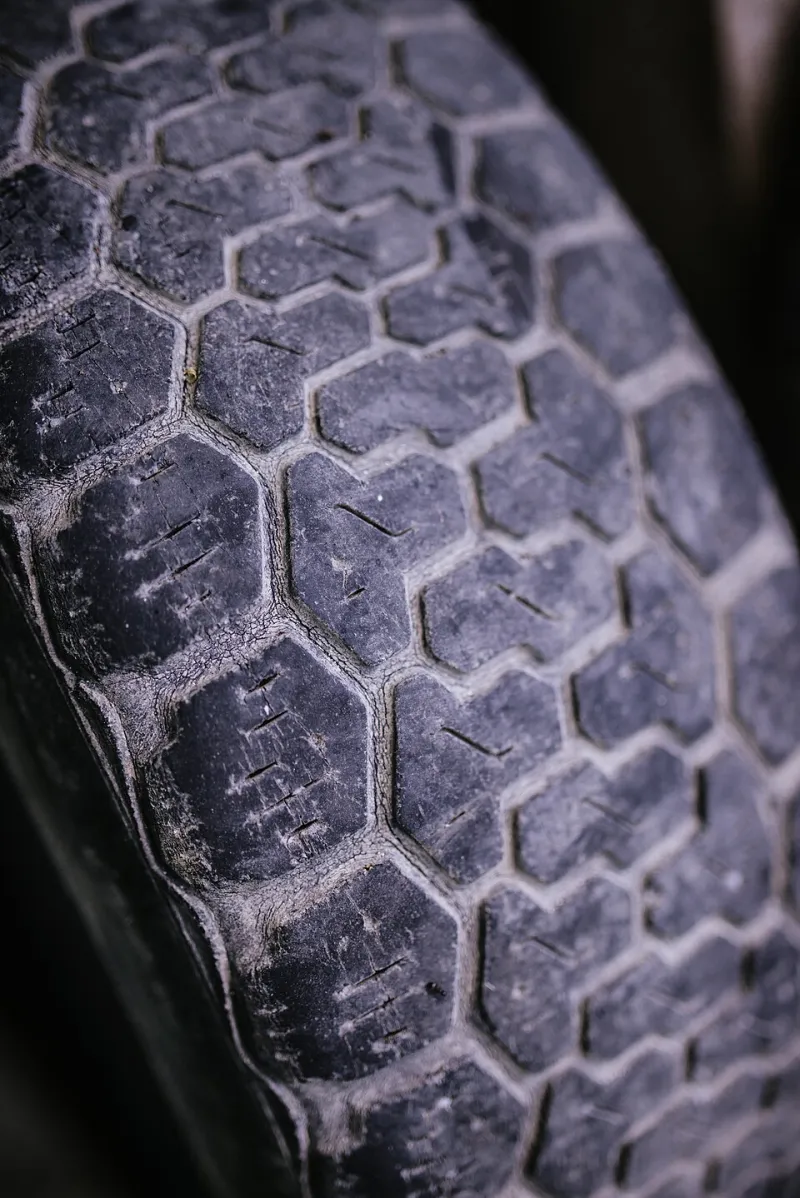
Photo by Photo by Luca Freddi on Unsplash on Unsplash
Most drivers walk into a tire shop with two numbers in their head: the price they hoped to pay and the pressure somebody told them years ago. There is a better number sitting a few feet from the steering wheel, and it costs nothing to read. It is the tire placard in the driver's door jamb.
At Edwin's Tires, we look at that sticker before we recommend anything. Not because it is fancy, but because it is the closest thing your vehicle has to a factory instruction sheet for tires. Ignore it and you can end up with a rough ride, uneven wear, or a set of tires that never quite fits the car.
Where It Lives and What It Says
Open the driver's door and look at the jamb — the painted pillar between the door and the rear of the front wheel well. You should see a label, usually white with black print. Some vehicles put tire information in the glovebox or fuel door instead, but the door jamb is the common spot in the US.
The placard lists the original tire size, the recommended cold tire pressure for front and rear, and often load information. On a pickup or SUV, it may show pressures for normal load and heavier load. It may also list the spare tire size and pressure. All of that is there so the vehicle engineers can tell you what the car wants, not what a tire salesman wants to sell you.
'Cold' pressure means the tire has sat for at least three hours, or you have driven less than a mile. Heat raises pressure, so a tire checked after a highway run will read higher than the placard number. That is normal. Set pressures when the tires are cold.
The Sidewall Number Is a Limit, Not a Recommendation
This is the mistake we see most often. A driver notices the tire sidewall says 'Max 44 PSI' or 'Max 51 PSI' and decides that must be the right number. It is not. That is the maximum pressure the tire can safely hold when it is carrying its rated load. Your car almost never wants the maximum.
One customer came in with a compact sedan and a complaint about a choppy, nervous ride. The tires were at 44 psi because that was the number on the sidewall. The door placard called for 32. We set them to 32, and the ride settled down. The center of the tread had also started wearing faster than the edges — a classic sign of overinflation.
The opposite happens too. A driver follows an old rule of thumb, runs 28 psi in every tire, and wonders why the shoulders look scuffed and the car feels lazy in turns. Underinflation flexes the sidewall more, builds heat, and wears the edges. Neither mistake is dramatic on day one. Both get expensive over a few thousand miles.
Size and Load: The Other Half of the Sticker
Pressure gets the attention, but the size line matters just as much. A typical placard might list something like P215/60R16 95H. That is width, aspect ratio, construction, wheel diameter, load index, and speed rating. You do not need to memorize the code, but you do need to respect it as the starting point.
We see plus-size mistakes all the time. A driver wants larger wheels and a taller look, so they buy a size that is close but not quite right. Maybe the overall diameter is off, so the speedometer reads wrong. Maybe the load index is lower than the original, which is a bad trade on a family SUV. Maybe the wider tire rubs the inner fender on a full turn. None of those problems show up in the parking lot. They show up on the first road trip.
That does not mean you can never change wheel size. It means the placard is the baseline. If you go bigger, the new tire should still carry at least the original load, stay close to the original overall diameter, and fit the wheel width. A shop that checks those things is doing real work. A shop that just asks what size you want is taking an order.
Load information on the placard also tells you how much weight the vehicle is designed to carry. If you regularly haul tools, luggage, or a full truck bed, check the owner's manual for guidance on higher rear pressures. Do not guess by feel. A tire that looks low may be right at spec, and a tire that looks fine may be overworked.
Shop-Counter Examples That Stick
A few years back, a driver brought in a used minivan with a vibration complaint. The tires were a mismatched set, and two of them were a size off from the placard. The van had been aligned, balanced, and rebalanced, but the wrong-size pair kept the ride unsettled. Once we matched the original size and set the pressures to the door sticker, the van finally drove like a minivan again.
Another customer bought a set of takeoff wheels online. They looked great. The load rating was lower than the placard called for, and the tires were filled to the sidewall max to 'be safe.' On a loaded vehicle, that combination is not safe. It is a tire working outside its design. We swapped to a properly rated set and set them cold to the door spec.
These are not rare stories. They are Tuesday.
A Two-Minute Habit Before You Buy
Before you shop for tires, take a photo of the placard. Write down the size, the front and rear pressures, and the load index if it is listed. Keep the photo on your phone. When you get a quote, compare it to that photo. If a salesperson recommends a different size, ask why it is better and whether it meets the original load rating. That is a fair question, and a good shop will answer it without a pitch.
Check your pressures once a month with your own gauge. Gas station gauges get dropped, and tire shop gauges get used all day. A cheap pencil gauge in the glovebox is better than guessing. If the placard is missing or unreadable, the owner's manual has the same information, and a dealer can print a replacement.
The placard is not glamorous. It does not have a brand name, a tread pattern, or a rebate. It is just the free advice your car came with. At Edwin's Tires, we would rather you read it than pay us to fix a problem it could have prevented.