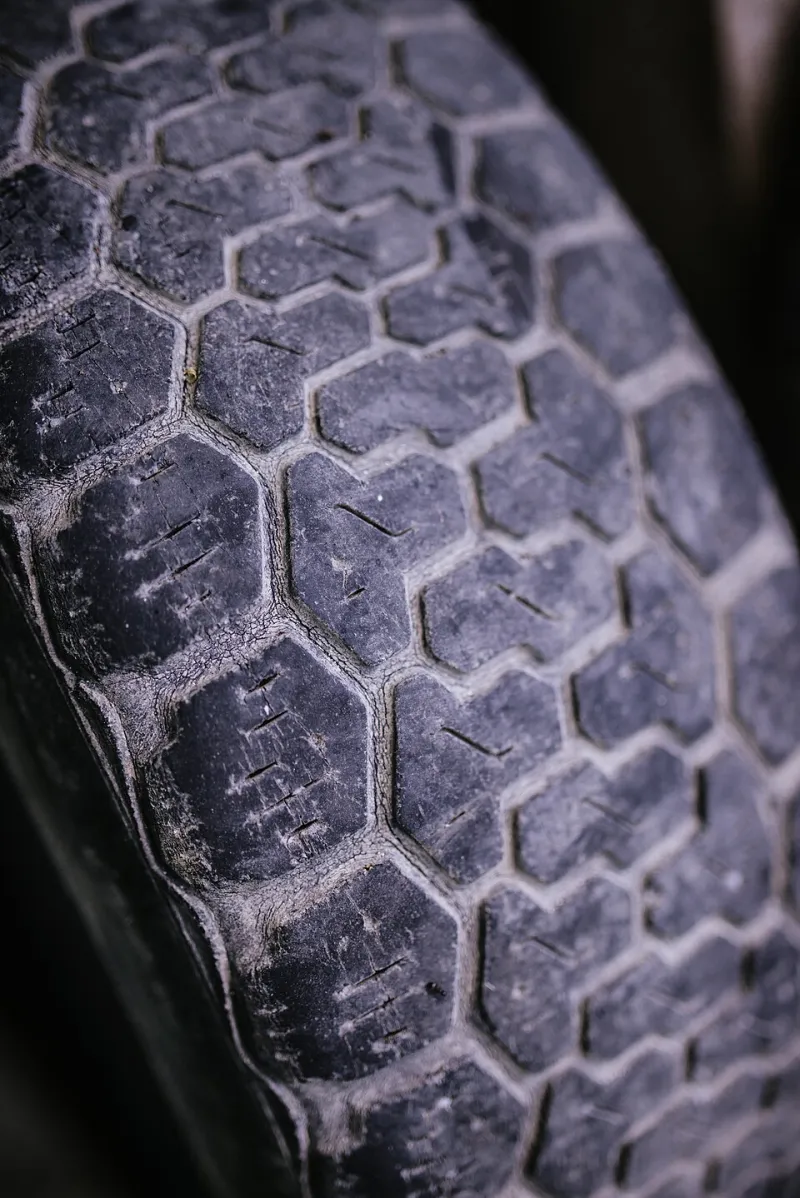
The Pair Goes in Back: A Two-Tire Rule That Feels Wrong Until It Doesn't

Photo by Photo by Tahamie Farooqui on Unsplash on Unsplash
You walk into a tire shop needing two new tires. You drive a front-wheel-drive sedan, so your first thought is simple: put the fresh rubber up front, where the engine sits, where the steering happens, where the power goes. That feels logical. It is also the opposite of what most tire professionals will recommend.
When you replace only two tires, the new pair generally belongs on the rear axle. Yes, even on front-wheel drive. It is one of those rules that sounds backward until you picture what happens when grip disappears on a wet road.
The short version
If you are buying two tires, mount the new pair on the back. Move the better of your existing tires to the front. This is the common recommendation from tire makers and safety organizations, and it applies to front-wheel drive, rear-wheel drive, and many all-wheel-drive vehicles. AWD owners should check the owner's manual first, because some systems are picky about tread-depth differences and may call for four tires instead.
The goal is not to reward the rear axle. The goal is stability.
What losing the rear actually feels like
When the front tires lose grip, the nose of the car pushes wide. Drivers often describe it as the steering going light or the car refusing to turn. It is not fun, but it is usually more intuitive to correct: ease off the gas, straighten the wheel a little, slow down, and let the front tires find the road again.
When the rear tires lose grip, the back of the car steps out. That is a different animal. The car starts to rotate around its center, and the corrections that feel natural — steering into the slide, easing off the throttle, maybe braking — can quickly become too much or too little. For an everyday driver on a rain-slicked highway ramp, a rear-end slide can turn into a spin before there is time to think.
New tires have deeper tread. Deeper tread moves more water out of the way and resists hydroplaning. If your new tires are on the front and your worn tires are on the rear, the front can clear water while the rear floats. The car may feel fine for a second, then the back end gets loose. That is the scenario the rear-axle rule is trying to prevent.
Why front-wheel drive does not change the math
Front-wheel drive means the front tires pull the car and do the steering. The rear tires are along for the ride, so it is tempting to think they do not matter much. But the rear axle is still carrying weight, especially under braking and in a corner. It is the anchor that keeps the car pointed in the direction you asked for.
A spinning front tire under acceleration is annoying. Traction control can step in, and you ease off. A sliding rear tire is a handling problem. Stability control can help, but it cannot repeal physics. Giving the rear axle the freshest tread gives the car a better chance to stay settled when the road turns slick.
The wet-road picture
Imagine a rainy afternoon, a worn set of rear tires, and a new pair up front. You merge onto the highway and the front tires cut through the water. The rear tires, with shallower grooves, have less capacity to channel water away. The back end wiggles. You lift off the gas. Weight shifts forward. The rear gets lighter. The wiggle becomes a slide.
Now flip it. New tires on the rear, older tires on the front. The front may push wide a little sooner in standing water, but the rear stays planted. You feel the problem at the steering wheel instead of in the seat of your pants. Easing off and slowing down usually brings the front back. That is a much better failure mode for a normal driver on a normal commute.
The objections we hear at the counter
But my drive wheels need the grip. This is the most common one. It makes sense for acceleration, especially in snow. But for everyday wet-road safety, keeping the rear planted matters more than getting the power down. If you need maximum traction at all four corners, that is a four-tire conversation, not a two-tire shortcut.
But my front tires wear faster. They often do, especially on front-wheel-drive cars. That is exactly why rotation matters. If your fronts are worn and your rears are decent, the new pair still goes on the rear, and the better used pair moves up front. You get the wear benefit without giving up stability.
But the shop is just trying to sell me something. The rear-axle rule does not sell more tires. You are buying the same two tires either way. It is a placement recommendation, not an upsell.
But I only drive around town. Low-speed wet intersections, leaves, and painted crosswalks can still surprise a car with mismatched grip. Safety rules are built for the boring trips, not just the dramatic ones.
When four tires are the smarter money move
Two new tires on the rear are the right call when the other pair still has useful tread and the car is a standard passenger vehicle. But there are times when four is the better decision: all-wheel-drive or four-wheel-drive systems that require close tread-depth matching, a damaged tire that cannot be matched to the others, or a set that is already near the end of its life. If all four are close to the wear bars, replacing them together lets you rotate regularly, keep handling consistent, and often qualify for a mileage warranty or rebate.
Check your owner's manual. Check the tread depth. And if a shop recommends four, ask why. A good explanation should make sense for your car, not just the sales ticket. At Edwin's Tires, we would rather show you the tread and talk it through than push a pair you do not need.
A quick glovebox habit
Check tread depth at least once a month and before long trips. The common legal floor is 2/32 inch, but wet traction starts fading well before that. Many safety folks suggest thinking about replacement at 4/32 for wet roads and 6/32 for snow. Keep tires inflated to the door-jamb sticker, rotate every 5,000 to 7,000 miles, and pay attention to how the car feels in the rain.
The rear-axle rule feels backward because we think about grip where the action is. The safer way to think about it is grip where the surprise happens. Put the new pair out back. Your future self on a rainy off-ramp will be glad you did.