Pack the Pie, Not a Tire Surprise: A Thanksgiving Week Once-Over

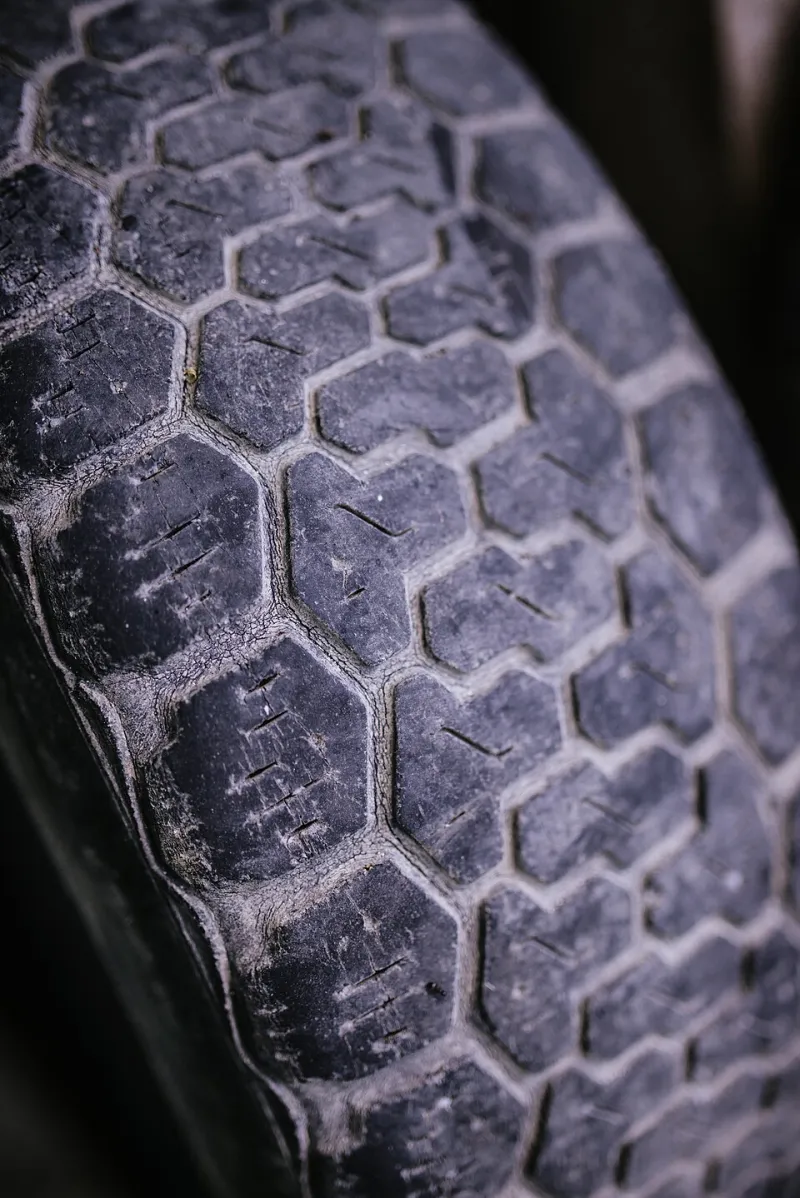
Photo by Photo by Benjamin Brunner on Unsplash on Unsplash
Thanksgiving week at a tire shop has a rhythm. Monday and Tuesday, it is people who waited. Wednesday, it is people who really waited. By Thursday morning, the lot is quiet and the phone starts ringing from the shoulder of a highway. We would rather see you now, with a coffee and a flashlight, than hear from you later with a donut and a story.
You do not need a lift or a mechanic's certificate to do the useful part. You need 20 minutes, a pressure gauge, a tread depth gauge, and a little honesty about what you are looking at. Here is what we would tell a neighbor before they head out of state.
Start with the sticker in the doorjamb
Most drivers read the number on the tire sidewall. That is the tire's maximum, not your car's recommendation. Open the driver's door and find the placard. It lists the cold tire pressure for your vehicle, sometimes for normal load and maximum load.
Cold means the car has sat for at least three hours, or you have driven less than a mile. Check the tires before the trip, not after an hour on the interstate. Thanksgiving means a full trunk, a back seat full of people, and maybe a dog. If the placard gives a loaded pressure, use it. If it does not, do not inflate past the tire's maximum just because the car is heavy. A few extra pounds can help with load, but too much air makes the center of the tread do all the work and reduces grip.
Check all four tires. Then check the spare.
Tread depth: skip the coin trick and use a number
The penny test is better than nothing, but it mostly tells you when you are already past the point where you should have replaced the tire. A cheap tread depth gauge gives you an actual measurement in 32nds of an inch. Measure the outer groove, the center groove, and the inner groove on each tire.
Two important numbers: 2/32 of an inch is the legal limit in most states, and 4/32 is where wet-weather traction starts falling off a cliff. If you are heading into rain or slush with 3/32, you are asking a lot of the tires.
Look at the pattern, too. If one edge is much lower than the other, you may have an alignment problem. If the center is worn, the tire has likely been overinflated. If both edges are worn, it has likely been underinflated. Cupping or scalloped spots can point to worn suspension parts. A tire that is wearing unevenly will keep wearing unevenly for the whole trip.
The spare is a tire, too
Plenty of newer cars do not have a spare at all. They have an inflator kit and a prayer. Know which one you have before you load the car. If you do have a spare, check its pressure. Compact spare tires often need around 60 psi, while a full-size spare may use the normal pressure listed on the placard. Check the owner's manual if you are not sure.
While you are back there, confirm the jack, lug wrench, and any wheel lock key are present. A spare with no jack is just extra weight. A locking lug nut with the key sitting on a workbench at home is a bad afternoon waiting to happen.
Lug nuts: torque, not guesswork
If you had a rotation or tire service recently, the lug nuts should be rechecked after about 50 to 100 miles. Use a torque wrench and the vehicle manufacturer's spec. Tighten in a star pattern, not in a circle. Do not stand on the wrench or guess by feel. Too loose can cause vibration or, in bad cases, a wheel coming off. Too tight can stretch studs and warp brake rotors.
If you do not own a torque wrench, ask the shop to check them. It takes less time than finding a parking spot at the mall.
The signs that mean do not take this tire
Some problems are easy to fix and some are a reason to change plans. Do not hit the road with a sidewall bulge, a cut deep enough to show cords, cracks that run along the sidewall, or a puncture in the shoulder of the tire. A tire that loses pressure overnight is telling you something. Air it up and drive across three states, and you are gambling on a highway shoulder at night.
Pay attention to vibration, too. A new shimmy at 60 mph could be a balance issue, a bent wheel, or a tire that is starting to come apart. It is worth diagnosing before the trip, not during it.
A 20-minute order that works
- Check cold pressure on all four tires and the spare.
- Measure tread depth in three spots on each tire.
- Look at both sidewalls for bulges, cuts, and cracks.
- Confirm the spare, jack, wrench, and wheel lock key are in the car.
- Recheck lug nut torque if you have had recent tire service.
- Note anything that looks marginal and get it looked at before Wednesday.
At Edwin's Tires, we would rather tell you a tire is fine than sell you one you do not need. But if it is not fine, we will say that too. A 20-minute check now beats a roadside wait later — especially when the pie is getting cold in the back seat.