All-Season Tires Aren't Winter Tires: Where All-Weather Actually Fits
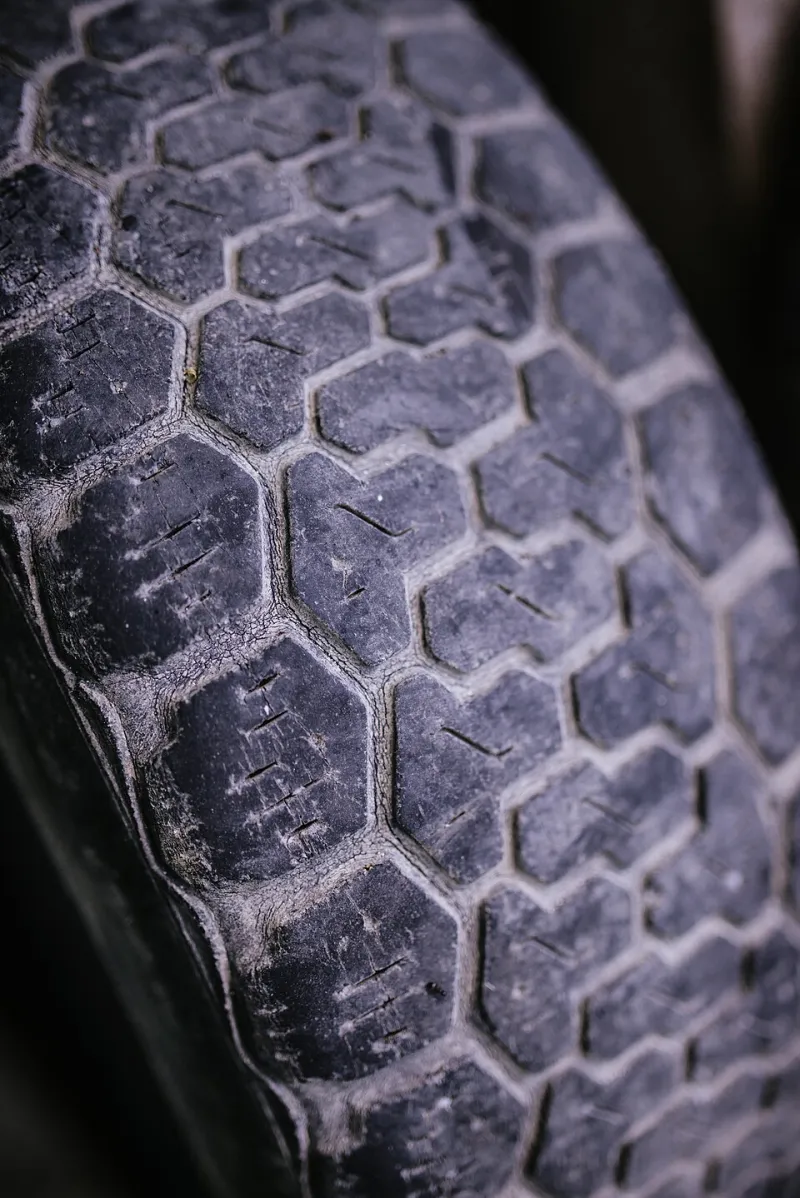
Photo: Shixart1985, CC BY 2.0, via Wikimedia Commons
November in most of the country means the forecast starts getting personal. And right around the first hard freeze, the same two labels show up in every tire conversation: all-season and all-weather. They sound like cousins. They are not.
Here's the honest breakdown we give customers at the counter, without the brochure gloss.
The sidewall label is doing more work than you think
Most all-season tires carry an M+S mark on the sidewall. That stands for mud and snow, but it's a self-certified label. It does not mean the tire passed a standardized snow-traction test. It means the tread has enough void ratio and biting edges to meet a fairly loose definition.
All-weather tires go further. They carry the three-peak mountain snowflake symbol, usually shortened to 3PMSF. That mark means the tire met a specific severe-snow traction standard. You'll see the same symbol on dedicated winter tires, but all-weather tires are built to run year-round instead of being swapped off in spring.
That symbol is the single most useful thing to look for on the sidewall. If a tire doesn't have it, it isn't winter-rated no matter what the name suggests.
All-season: the long-haul default
All-season tires are designed for three-season duty. They give you decent dry grip, predictable wet handling, a quiet ride, and long tread life. In light snow they can be okay when they're new, but the rubber compound stiffens as temperatures drop, and the tread pattern isn't built to bite into packed snow.
If you live somewhere snow is rare, plows clear the roads fast, and you can stay home on the bad day, all-season is a sensible choice. You're not paying for winter capability you won't use. You're buying mileage, comfort, and a lower price per tire.
The flip side: all-season is not a winter tire. If you're driving before the plows on a regular basis, or your commute includes hills and shaded roads that stay icy, all-season will eventually show you its limits.
All-weather: winter-rated, but not a winter tire
All-weather tires sit between all-season and dedicated winter rubber. They keep a softer compound and a more aggressive tread pattern, so they handle cold rain, slush, and light snow better than a typical all-season. The 3PMSF symbol backs that up with an actual test standard.
But all-weather is not a magic bullet. It is not a substitute for a true winter tire in deep snow, steep mountain passes, or hard ice. If you face real winter, a dedicated winter set is still the gold standard. All-weather is best understood as a one-set solution for drivers who see meaningful winter weather but don't want the hassle and storage of a second set of wheels.
Tread life, cost, and the math that actually matters
Expect all-weather tires to run maybe $10 to $30 more per tire than a comparable all-season. Their treadwear warranty is often lower, too, because the softer compound that helps in cold weather tends to wear faster in heat.
That extra cost can be worth it if you see regular snow and want one set of tires to handle the whole year. It's harder to justify if you see snow once or twice a season and the roads are clear by noon.
Don't let anyone sell you all-weather for a climate that doesn't need it. And don't let anyone sell you all-season as a winter tire. Both are good products. They just solve different problems.
Which driver are you?
- Mild climate, no real snow: all-season is the value play.
- Occasional light snow, cleared roads, flexible schedule: a good all-season with healthy tread may be enough; all-weather buys you margin.
- Regular snow, rural roads, early commutes, hills: all-weather at minimum; dedicated winter tires are better.
- You already own winter tires: run all-season the rest of the year and save the soft compound for cold months.
- You drive AWD or 4WD: remember that all-wheel drive helps you go, not stop. Tires still decide how short your stopping distance is.
What to ask before you commit to a set
Before you pay for four tires, ask the person behind the counter a few direct questions:
- Does this tire carry the three-peak mountain snowflake, or just M+S?
- What's the treadwear warranty, and how does it compare with the all-season option?
- Does the load index and speed rating match what's on my door placard?
- Are rotations, road hazard coverage, and TPMS service included?
- Will you check alignment while the tires are off?
- What's the return or trial policy if I don't like the ride?
At Edwin's Tires, we'd rather you leave with the right tire than the most expensive one. Bring us your commute, your road conditions, and your current tread depth. We'll help you sort out whether all-season or all-weather actually fits your winter, not just the label on the shelf.